

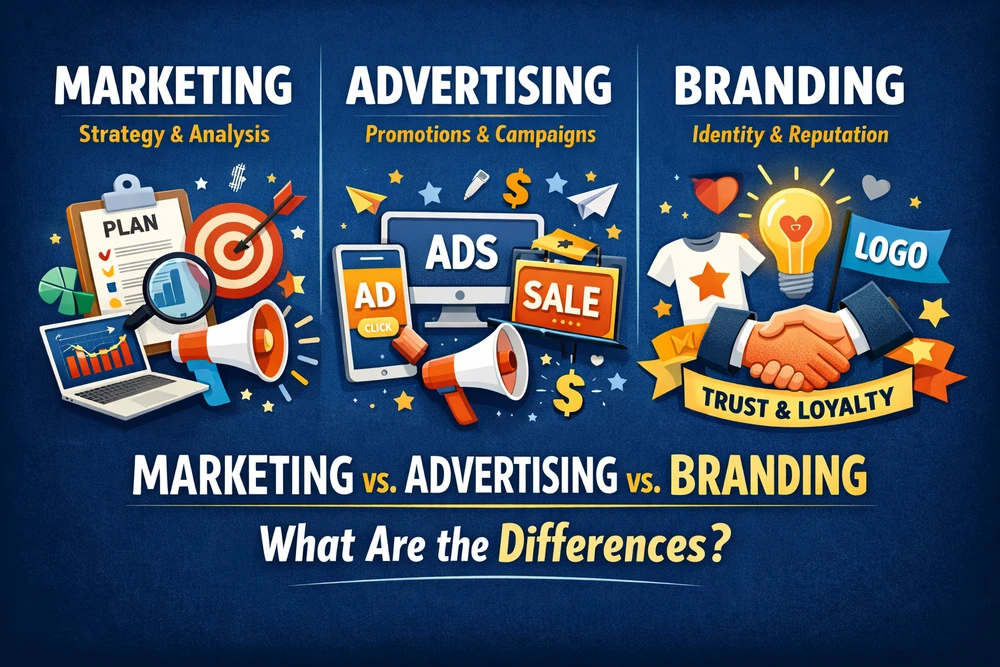
Branding defines who your business is, marketing is the overall strategy for attracting and keeping customers, and advertising is the paid promotion that puts your message in front of people. Advertising is one part of marketing, and branding is the foundation both rely on. You need all three working together, because weak branding makes marketing struggle and an unclear strategy leads to inconsistent advertising.
- ✓Branding covers your visual identity, tone of voice, values, messaging and the feeling customers associate with you.
- ✓Marketing runs from market research and pricing strategy through to SEO, email campaigns and analytics.
- ✓Advertising means paid promotion through channels like Google Ads, Facebook and Instagram, YouTube, radio, TV, print and billboards.
- ✓Ads without a clear message and audience connection can bring clicks but no conversions.
- ✓Start with branding and marketing strategy, then invest in advertising to amplify the message.
Why the Distinction Matters
Business owners expanding their operations must understand that marketing, advertising, and branding represent distinct concepts. Confusion between these terms can cost time, revenue, and success opportunities.
Your business expansion resembles building construction with three functional stages:
- Branding serves as the base structure and visual design elements of your business identity
- Marketing functions as the complete building strategy directing all business operations
- Advertising functions as the instrument directing potential customers to your establishment
These components perform distinct functions, and system failure occurs when any component becomes disabled.
Marketing
A complete marketing plan attracts customers who become paying, loyal customers. Common components include:
- Market research
- Competitor analysis
- Pricing strategy
- Customer journey mapping
- Content creation
- Social media strategy
- Email campaigns
- SEO
- Lead generation
- Analytics and reporting
Marketing Is About Strategy
Marketing answers critical questions:
- Who is your ideal customer?
- What problem do you solve?
- How are you different from competitors?
- Where should you promote your business?
- How do you turn leads into paying customers?
Professional marketing services provide structured plans ensuring every dollar spent aligns intentionally with growth.
Advertising
Advertising serves as one marketing component, involving paid promotions showcasing products and services to potential customers. Platforms include:
- Google Ads
- Facebook and Instagram advertisements
- YouTube advertisements
- Radio and television commercials
- Print advertisements
- Billboards
Advertising Is About Immediate Attention
Advertising typically aims to:
- Drive traffic
- Generate leads
- Increase sales
- Promote limited-time offers
Advertising achieves highest effectiveness through strong branding and marketing foundations. Without message clarity and audience connection, advertisements generate clicks but produce no actual conversions.
Branding
People develop their business understanding through branding elements. Company identity extends beyond logos to include:
- Your visual identity
- Your tone of voice
- Your values
- Your messaging
- The emotional experience customers associate with you
Branding answers: why should someone choose you over everyone else?
Branding Is About Trust and Connection
Strong branding builds:
- Recognition
- Credibility
- Loyalty
- Emotional attachment
For small businesses, competition with large corporations centers on building customer relationships rather than budget differences. Customer trust in your brand increases the likelihood that customers will click ads, engage with content, refer others, and stay loyal.
How They Work Together
Understanding these differences means seeing how they complement each other:
- Branding defines who you are
- Marketing creates the strategy to reach your audience
- Advertising executes specific promotional tactics
Weak branding makes marketing struggle. Unclear marketing strategy creates inconsistent advertising. Never advertising causes growth stagnation. You need all three in the right balance.
FAQs
What is the biggest difference between marketing and advertising?+
Marketing serves as the comprehensive approach, while advertising functions as a specific marketing component to implement.
Is branding part of marketing?+
Yes. Branding functions as a fundamental marketing component determining both channels and delivery methods for marketing messages.
Can I advertise without branding?+
You can technically execute advertising campaigns without branding, but this approach usually fails to generate sustainable results. Ads lack emotional connection and unique identity without established brand image.
Which should I focus on first?+
Start with branding and strategy (marketing), then invest in advertising to amplify your message.
Do small businesses need managed marketing services?+
Managed marketing services deliver expertise and structured support with built-in accountability, helping businesses achieve continuous growth without burnout.
What questions should a marketing strategy answer?+
A marketing strategy should tell you who your ideal customer is, what problem you solve and how you're different from competitors. It should also set out where to promote your business and how you'll turn leads into paying customers. Once those answers are clear, advertising has something solid to amplify.
Does print advertising still belong in a marketing plan?+
Yes. Print ads and billboards sit on the same list of advertising channels as Google Ads and social ads, and they work best when the branding matches across all of them. We handle digital, offset and large format printing under one roof, with a proof before anything goes to print.
The Bottom Line
Marketing, advertising, and branding are not interchangeable terms — they are interconnected but distinct business growth components. Most small business owners struggle because they don't know where to begin.
Sustainable business growth requires developing brand identity while creating a marketing framework to carry out advertising initiatives. These three components create permanent customer connections and generate steady income.
Ready to Grow Your Market the Right Way?
At Emmpressit, we specialise in comprehensive Marketing Services and results-driven Managed Marketing Services tailored for small businesses across Australia. Let us help you clarify your brand, build strategy, and run advertising campaigns that actually convert.